

Adoption Doesn’t End at the Signature
Ignace Ismayilov
Master’s student in History at the VUB and Support Lead at WeDecolonize
11.26.2025
November is Adoption Awareness Month, but what does “awareness” mean when adoptees are not heard, and when adoption increasingly resembles a business model that places adoptive parents at the center instead of the child?
In Belgium, support ends the moment the adoption is finalized: everything leading up to that moment is meticulously arranged, yet afterwards it becomes strikingly silent. As an intercountry adoptee, I never received any structural support around identity development, loss, or trauma. No psychologist trained in adoption trauma. No guidance when, after years of searching, I finally found my family. The system supports adults in their desire to adopt, but leaves the adoptee alone with the consequences.
Yet the Belgian Adoption Law of April 24, 2003 explicitly states that adoption is only permissible “in the best interest of the child” and that prospective adoptive parents must be informed about the importance of post-adoption support. But there is a vast difference between “providing information” and having an actual right to support. Assistance ends once the procedure is completed, and all burdens fall onto the child.
Market logic: when a child becomes a product risk
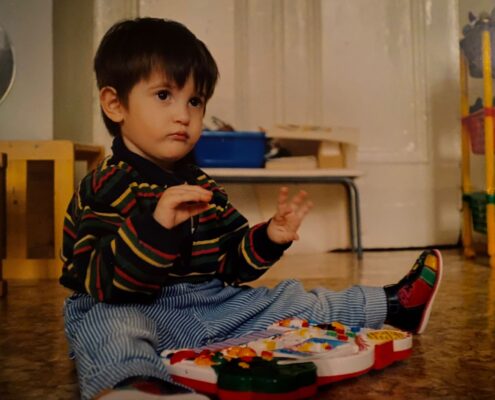
My life didn’t begin with a choice. As a child, I was illegally taken from my biological parents, after which the adoption system laundered that abduction into a legal adoption. Even when a judge involved in my case was shot, the adoption still went through, and no one asked questions.
My story is not exceptional, but an uncomfortable truth many adoption agencies prefer to ignore: adoption is not only care, it is also a market. There is demand for children, and thus a supply chain emerges to meet that demand. Intercountry adoption is increasingly viewed as a business model that responds to the wishes of prospective adoptive parents, rather than the needs of the child. Researcher Gabriela Misca calls intercountry adoption the “quiet migration” of children, moving vulnerable children from the Global South to the West, and shows, along with Young, how the system shifted from humanitarian aid to market-driven policy (Misca, 2014).
Endless procedures, intermediaries, certificates, screenings… Adoption scholar and legal expert Martha Ertman calls this “the commodification of children”: the risk that children are treated “as objects, and therefore not as persons, within a transaction” (Ertman, 2022).
The Belgian government now acknowledges that up to 30,000 domestic adoptions since the 1950s may have involved biological parents who were not, or barely, informed (Brussels Times, 2022; Belgian Parliament DOC553829/001). Despite similar indications of misconduct in intercountry adoptions, no systematic investigation of these files has been launched (FIRM, 2024). My adoption was legalized without verifying the truth, without checking my origins, and without any post-adoption support. The government admits the system was vulnerable to abuse, but adoptees are expected to process that abuse on their own.
When I attempted to trace my origins as an adult, I paid for everything myself: travel, visas, DNA testing. The lack of support echoed the same market logic: the product has been delivered, and the warranty period has expired.
The Adoptee as a “Blank Slate”
Much adoption discourse remains trapped in a rescue narrative: the child “gets a better life.” According to Homans, adoptees are narratively disciplined: expected to be grateful, suppress difficult emotions, and maintain the “beautiful adoption story.” Not only our origins are rewritten, we are rewritten (Homans, 2006).
Gratitude becomes a moral obligation. Anyone who speaks about loss, trauma, or anger risks being labeled ungrateful. For many adoptees, that expectation becomes an obstacle to speaking honestly about adoption.
But we did not choose adoption. Others made that decision for us, often without complete or truthful information. The logic must be reversed: adoptees should not be grateful for adoption; adoption should be grateful for the child. Without a child, there is no adoption.
Many adoption files carry the same subtext: “Your real life starts now.” Everything before the adoption supposedly doesn’t matter. But that past exists. The culture, the first language, the first country, the birth, the loss, all of it is already written before adoptees spend even a single second with their adoptive families.
When you adopt a child, you also adopt their history. Denying that history is not protection, it is dehumanization.
There is an Alternative: Post-Adoption Care as a Right
If adoption truly intends to serve “the best interest of the child,” then adoptees must have a legal right to post-adoption support, including specialized psychological care focused on identity, loss, and trauma. Equally essential is the right of adoptees to explore their origins. A publicly funded program that facilitates search and reunion, including travel, could serve as meaningful restorative justice.
When the colonized fight back, their rage is called terrorism. When the colonizer bombs hospitals, it’s called defense. The violence of the oppressed is hyper-visible; the violence of the oppressor is structural, normalized, invisible.
Above all, transparency should be central. Adoption files must be actively reconstructed, even through international cooperation when needed, to ensure that adoptees gain access to accurate information about their past. Adoption policy should not focus solely on the number of adoptions completed, but on the long-term well-being of adoptees, measured and reported annually.
Only then are adoptees seen as people, not as objects.
Adoption doesn’t end at the signature. For the system, that’s where it stops. For us, that’s where it begins.
 https://www.ucos.be/wp-content/uploads/2025/12/IMG-20251211-WA0024.jpg
1536
2048
Ghassan Bardawil
https://www.ucos.be/wp-content/uploads/2017/07/header_logo.png
Ghassan Bardawil2025-12-11 11:54:302026-06-23 09:21:53Adoption Dosen't End at the Signature
https://www.ucos.be/wp-content/uploads/2025/12/IMG-20251211-WA0024.jpg
1536
2048
Ghassan Bardawil
https://www.ucos.be/wp-content/uploads/2017/07/header_logo.png
Ghassan Bardawil2025-12-11 11:54:302026-06-23 09:21:53Adoption Dosen't End at the Signature https://www.ucos.be/wp-content/uploads/2025/12/gaza-destruction-blog.jpg
513
665
Ghassan Bardawil
https://www.ucos.be/wp-content/uploads/2017/07/header_logo.png
Ghassan Bardawil2025-12-01 15:17:042025-12-11 19:33:14When White Relief Meets Palestinian Reality
https://www.ucos.be/wp-content/uploads/2025/12/gaza-destruction-blog.jpg
513
665
Ghassan Bardawil
https://www.ucos.be/wp-content/uploads/2017/07/header_logo.png
Ghassan Bardawil2025-12-01 15:17:042025-12-11 19:33:14When White Relief Meets Palestinian Reality https://www.ucos.be/wp-content/uploads/2024/03/WhatsApp-Image-2024-03-08-at-13.54.42_061c73dc.jpg
1600
1201
Ghassan Bardawil
https://www.ucos.be/wp-content/uploads/2017/07/header_logo.png
Ghassan Bardawil2024-03-08 15:55:462024-03-12 12:23:09Women's Day Under Bombardment
https://www.ucos.be/wp-content/uploads/2024/03/WhatsApp-Image-2024-03-08-at-13.54.42_061c73dc.jpg
1600
1201
Ghassan Bardawil
https://www.ucos.be/wp-content/uploads/2017/07/header_logo.png
Ghassan Bardawil2024-03-08 15:55:462024-03-12 12:23:09Women's Day Under Bombardment https://www.ucos.be/wp-content/uploads/2024/02/Congo-is-Bleeding-e1708715513115.jpg
1410
1410
Ghassan Bardawil
https://www.ucos.be/wp-content/uploads/2017/07/header_logo.png
Ghassan Bardawil2024-02-23 16:28:272024-02-26 18:57:06Congo is Bleeding draws nearer
https://www.ucos.be/wp-content/uploads/2024/02/Congo-is-Bleeding-e1708715513115.jpg
1410
1410
Ghassan Bardawil
https://www.ucos.be/wp-content/uploads/2017/07/header_logo.png
Ghassan Bardawil2024-02-23 16:28:272024-02-26 18:57:06Congo is Bleeding draws nearer https://www.ucos.be/wp-content/uploads/2024/02/insta-post.jpg
1080
1080
Ghassan Bardawil
https://www.ucos.be/wp-content/uploads/2017/07/header_logo.png
Ghassan Bardawil2024-02-19 12:27:462024-02-19 12:37:34Congo is Bleeding
https://www.ucos.be/wp-content/uploads/2024/02/insta-post.jpg
1080
1080
Ghassan Bardawil
https://www.ucos.be/wp-content/uploads/2017/07/header_logo.png
Ghassan Bardawil2024-02-19 12:27:462024-02-19 12:37:34Congo is Bleeding https://www.ucos.be/wp-content/uploads/2024/01/Palestinian-flag-at-the-Hague.jpg
489
870
Ghassan Bardawil
https://www.ucos.be/wp-content/uploads/2017/07/header_logo.png
Ghassan Bardawil2024-01-25 22:52:072024-02-28 22:18:25ICJ case and the rules-based world order
https://www.ucos.be/wp-content/uploads/2024/01/Palestinian-flag-at-the-Hague.jpg
489
870
Ghassan Bardawil
https://www.ucos.be/wp-content/uploads/2017/07/header_logo.png
Ghassan Bardawil2024-01-25 22:52:072024-02-28 22:18:25ICJ case and the rules-based world order https://www.ucos.be/wp-content/uploads/2024/01/member-reading-11.2021.jpg
1365
2048
Ghassan Bardawil
https://www.ucos.be/wp-content/uploads/2017/07/header_logo.png
Ghassan Bardawil2024-01-25 22:45:532024-01-26 02:17:11A Farewell to the WDVUB Library
https://www.ucos.be/wp-content/uploads/2024/01/member-reading-11.2021.jpg
1365
2048
Ghassan Bardawil
https://www.ucos.be/wp-content/uploads/2017/07/header_logo.png
Ghassan Bardawil2024-01-25 22:45:532024-01-26 02:17:11A Farewell to the WDVUB Library https://www.ucos.be/wp-content/uploads/2023/12/original_e0c41f1b-e8c5-4327-be11-43b35c6b9b0c_Screenshot_20231201-181037.png
1035
1080
Ghassan Bardawil
https://www.ucos.be/wp-content/uploads/2017/07/header_logo.png
Ghassan Bardawil2023-12-01 17:01:272023-12-07 12:39:03For When They Try to Make You Take off Your Kiffiye
https://www.ucos.be/wp-content/uploads/2023/12/original_e0c41f1b-e8c5-4327-be11-43b35c6b9b0c_Screenshot_20231201-181037.png
1035
1080
Ghassan Bardawil
https://www.ucos.be/wp-content/uploads/2017/07/header_logo.png
Ghassan Bardawil2023-12-01 17:01:272023-12-07 12:39:03For When They Try to Make You Take off Your Kiffiye https://www.ucos.be/wp-content/uploads/2023/11/in-our-skin-cover-blog.jpg
1072
1080
Ghassan Bardawil
https://www.ucos.be/wp-content/uploads/2017/07/header_logo.png
Ghassan Bardawil2023-11-29 15:30:302023-12-07 12:40:04In Our Skin
https://www.ucos.be/wp-content/uploads/2023/11/in-our-skin-cover-blog.jpg
1072
1080
Ghassan Bardawil
https://www.ucos.be/wp-content/uploads/2017/07/header_logo.png
Ghassan Bardawil2023-11-29 15:30:302023-12-07 12:40:04In Our Skin https://www.ucos.be/wp-content/uploads/2023/11/DSCF5295.jpeg
1365
2048
Ghassan Bardawil
https://www.ucos.be/wp-content/uploads/2017/07/header_logo.png
Ghassan Bardawil2023-11-23 11:06:462023-12-07 12:41:21Ahlan wa Sahlan
https://www.ucos.be/wp-content/uploads/2023/11/DSCF5295.jpeg
1365
2048
Ghassan Bardawil
https://www.ucos.be/wp-content/uploads/2017/07/header_logo.png
Ghassan Bardawil2023-11-23 11:06:462023-12-07 12:41:21Ahlan wa Sahlan https://www.ucos.be/wp-content/uploads/2023/10/1.png
1080
1080
Alberto Vazquez Ruiz
https://www.ucos.be/wp-content/uploads/2017/07/header_logo.png
Alberto Vazquez Ruiz2023-10-12 13:14:212023-10-30 10:26:03Joint Statement for Palestine by Flemish student organisations
https://www.ucos.be/wp-content/uploads/2023/10/1.png
1080
1080
Alberto Vazquez Ruiz
https://www.ucos.be/wp-content/uploads/2017/07/header_logo.png
Alberto Vazquez Ruiz2023-10-12 13:14:212023-10-30 10:26:03Joint Statement for Palestine by Flemish student organisations https://www.ucos.be/wp-content/uploads/2022/04/DSCF5660.jpg
1365
2048
Esther Philippen
https://www.ucos.be/wp-content/uploads/2017/07/header_logo.png
Esther Philippen2022-04-27 15:03:262023-10-30 10:32:17Artist Talk WDVUB - Cynthia Ntigurirwa
https://www.ucos.be/wp-content/uploads/2022/04/DSCF5660.jpg
1365
2048
Esther Philippen
https://www.ucos.be/wp-content/uploads/2017/07/header_logo.png
Esther Philippen2022-04-27 15:03:262023-10-30 10:32:17Artist Talk WDVUB - Cynthia Ntigurirwa https://www.ucos.be/wp-content/uploads/2022/03/tempImagexr0Zfl.webp
530
707
Alberto Vazquez Ruiz
https://www.ucos.be/wp-content/uploads/2017/07/header_logo.png
Alberto Vazquez Ruiz2022-03-24 14:30:062023-11-09 16:32:20a Blueprint study for a Master in Critical Diaspora, Race and Liberation Studies
https://www.ucos.be/wp-content/uploads/2022/03/tempImagexr0Zfl.webp
530
707
Alberto Vazquez Ruiz
https://www.ucos.be/wp-content/uploads/2017/07/header_logo.png
Alberto Vazquez Ruiz2022-03-24 14:30:062023-11-09 16:32:20a Blueprint study for a Master in Critical Diaspora, Race and Liberation Studies